
A quick word first: this guide is general, friendly information, not legal advice. Property and fence rules differ between Seattle, other King County cities and unincorporated areas, and HOAs can add their own. When in doubt, ask the City of Seattle (SDCI) or King County's permitting office, and talk to a professional surveyor or an attorney about boundary questions.
1. Talk before you plan
The best time to bring up a new fence is before you've picked a style or booked anyone. Neighbors who hear about a fence from a crew unloading posts rarely feel great about it. Neighbors who were asked what they thought usually do.
- Knock, don't text, if you can. A face-to-face chat over the old fence sets a friendly tone.
- Share the why. A new puppy, a toddler who's learned to run, a hot tub that needs screening: reasons make the plan easier to understand.
- Ask what they'd like. Maybe they've been wanting privacy too, or they'd love a gate between the yards for the kids.
- Bring a picture. A photo of a style you like is worth a lot of explaining.
Even if you plan to build and pay for the fence entirely yourself, a heads-up is a kindness. Work along a shared line affects both yards for a few days.
2. Find the line for sure
Old fences, hedges and that stake someone found years ago are not reliable markers. Fences drift, and a few inches can matter a lot later on, when either house is sold.
- Check whether you already have a survey from when you bought the home, or a plat map from the county.
- If the corners aren't clearly marked, a professional land surveyor can locate and flag them.
- Decide together whether the fence will sit entirely on one owner's side or be centered on the line. If you choose the line, it's wise to put that agreement in writing.
We'll ask about the property line at the site visit, and we build to the markers and the plan you and your neighbor agree on.
3. Which side faces out
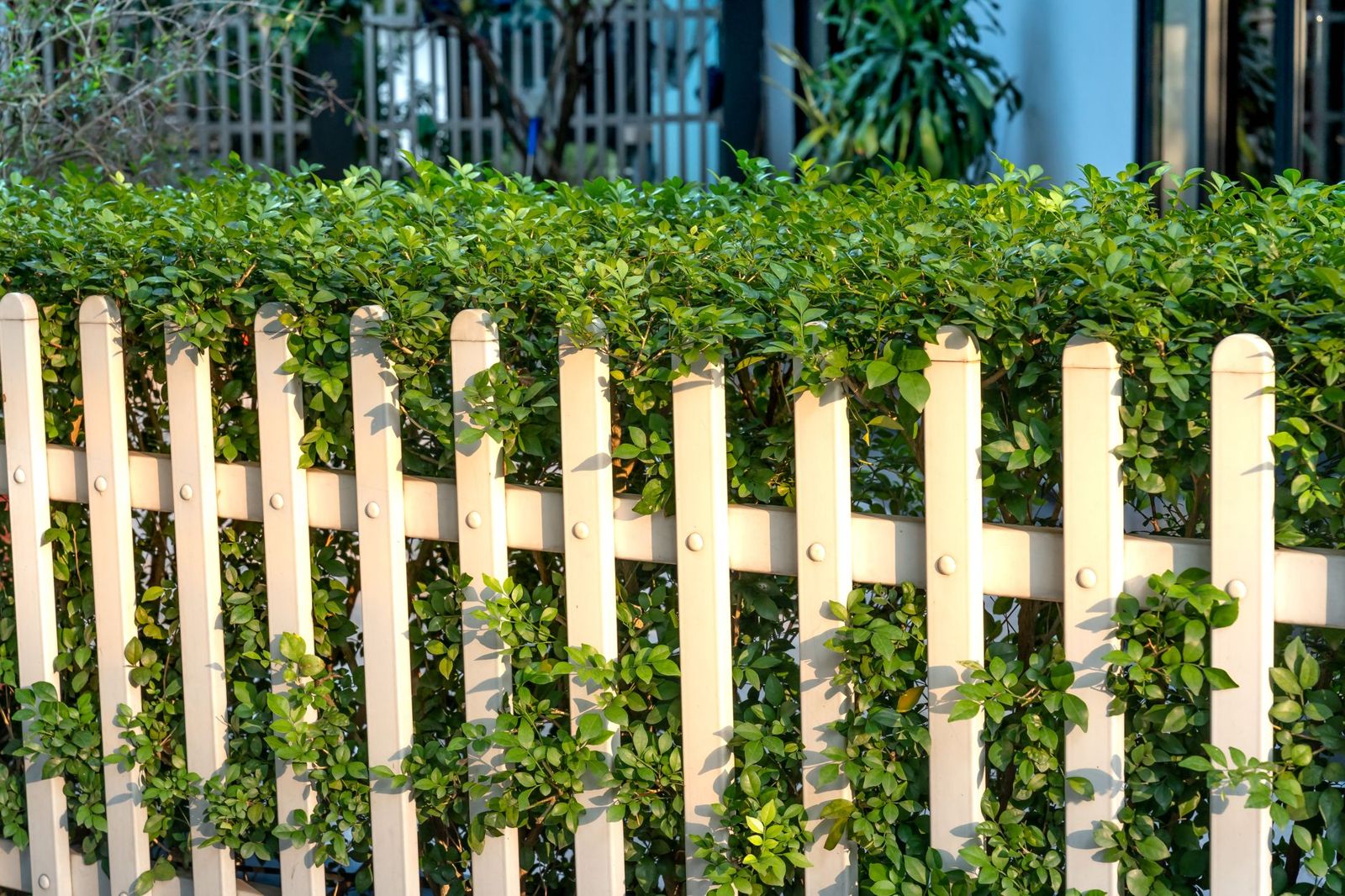
The long-standing custom is that the smooth, finished face of a fence points toward the neighbor and the street, with posts and rails on the builder's side. It's considered polite, and some places have rules about it, so it's worth checking.
The easier path is often a fence that has no "bad side" at all:
- Good-neighbor pickets that alternate across the rails.
- Shadowbox or board-on-board styles that look finished from both yards.
- Horizontal fences with boards or trim on each face.
You'll find more on each of these on our wood and cedar fence page.
4. Height and style for both yards
Your perfect fence might put your neighbor's vegetable bed in shade all afternoon. A quick walk along the line together, looking at sun, views and slopes, heads off most disagreements.
- Sun and shade: think about where the fence's shadow falls in the morning and late afternoon.
- Views: privacy near a patio, openness near a garden or a view you both enjoy.
- Slopes: on a hill, a fence can step down in level sections or follow the ground. Each looks different from below.
- Rules: height limits and requirements near sidewalks, corners and driveways vary, so check with SDCI or King County, plus any HOA.
A common compromise: solid privacy boards up to a comfortable height, topped with lattice or open slats that let light through.
5. Pets and kids

If a dog or a small child is the reason for the fence, plan for both sides of the line. Your dog's barking and digging affect the neighbors too, and their kids might be the ones peeking through.
- Diggers: keep the bottom gap small, and consider a buried wire or gravel barrier along the base.
- Jumpers and climbers: a taller fence helps, and so does keeping horizontal rails on the side away from the dog or child so they can't be used as ladders.
- Squeezers: tighter picket spacing for small dogs and toddlers.
- Barkers: a solid fence can calm a dog that reacts to movement next door.
If there's a pool on either property, check the local pool barrier rules before you design the fence.
6. Gates on a shared line
Some neighbors love having a gate between the yards: kids can run back and forth, and borrowing the ladder gets easier. If you add one, talk through a few things first.
- Which way it swings, and whose yard it opens into.
- Whether it latches from both sides, or only one.
- A self-closing hinge and latch if either household has pets or small children.
- What happens if one of you moves. A gate is easy to lock or replace with a panel later.
For access from the street or driveway, see our fences and gates page.
7. Splitting the cost
Who pays for a shared fence is between you and your neighbor, and local rules can come into play, so we can't give legal advice about it. What we can say is that the neighbors who get along best afterward usually agree on the plan in writing before any work begins: who pays for what, where the fence sits, who owns it and who looks after it.
A few common arrangements:
- Split the whole project evenly.
- Split a basic fence, with one household paying extra for an upgrade it wants.
- One household pays, builds on its own side and owns the fence.
If it helps the conversation, ask us to break the estimate into clear line items so you can both see where the costs are.
8. After the fence goes up
A fence is a long-term relationship. A few habits keep it friendly:
- Agree on how each side will be cared for, whether that's staining, cleaning or clearing moss.
- Keep vines and heavy shrubs off the boards. They hold moisture and add weight.
- Ask before painting or attaching things to the side that faces the neighbor.
- Talk before replacing or changing the fence, even years down the road.
Quick checklist
- Talked with the neighbor about the idea and the reason for it
- Confirmed the property line with a survey or clear markers
- Agreed where the fence will sit: one side or on the line
- Picked a style that looks finished from both yards
- Checked height and placement rules with SDCI, King County or your city, plus any HOA
- Planned for pets, kids, gates and latches
- Put cost, ownership and upkeep in writing